
Google Ads · SEO · Web
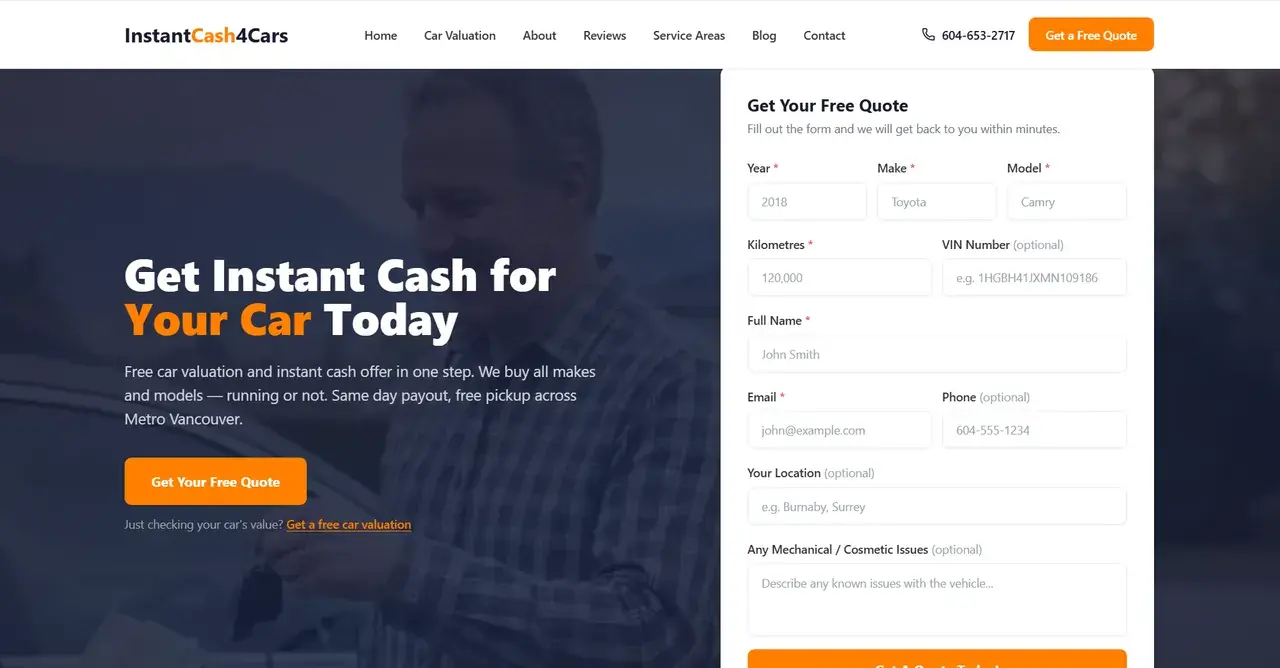
InstantCash4Cars
Less spend. The business volume stayed.
Acquisition rebuilt end-to-end: Google Ads strategy, conversion tracking and transparent reporting, with website and local-search support behind it.
Paid Growth · Vancouver
Know the math before you spend.
Google Ads and PPC management for Vancouver businesses that want to know what a customer costs before they commit a budget. Conversion tracking goes in first, results are reported as cost per customer, and the ad accounts stay yours.
5.05 out of 5.10 Google reviews
The problem
Paid campaigns fail when media, landing pages and sales economics are treated as separate problems.
Click
Landing page
Lead
Sales conversation
Customer
Every step has a conversion rate.Every step changes what a lead can cost.
A campaign judged only on clicks can look successful while the business underneath it loses money on every customer. The economics have to be understood end to end, before the budget moves.
Acquisition model
Average revenue or gross value from a new customer.
Of the leads you receive, the share that become customers.
The most you are willing to pay to win one customer.
Of the visitors who land, the share that become leads. Optional.
The model
Traffic Lead Customer Revenue
Example planning model. Actual performance depends on market demand, competition, conversion rate, margins, sales process and campaign execution. Nothing you enter here is stored or sent anywhere.
The system
Understand the available market and customer intent.
Match message and targeting to that intent.
Give the customer one clear reason to act.
Measure calls, forms, bookings and qualified leads.
Make sure the lead actually receives a response.
Connect marketing activity with real customers.
Know what produced the business.
01 / High-intent demand
Google Ads
Search works best when customers already know what they need. The job is to capture that intent efficiently and send it to an experience capable of converting it.
02 / Demand creation
Paid Social
Meta, Instagram and TikTok create demand; search captures it. We take on paid social when the audience and the offer suit it, with the same tracking and the same cost-per-customer reporting as search. Search is where our published results are today.
03 / Re-engagement
Remarketing
Most visitors do not act on the first visit. Compliant, consent-based audiences keep the business present through the decision without following anyone around the internet.
04 / Conversational research
ChatGPT Ads
ChatGPT Ads management in Vancouver and CanadaPeople increasingly describe a problem to an assistant before they choose a supplier. Sponsored placements can appear beside those conversations. The channel is early, so we treat it as a measured pilot rather than a budget shift.
After the click
Paying for traffic before fixing the landing experience is often just paying to expose the problem faster.
This is why we also build the destinations. When the landing experience is part of the same engagement, message, page and measurement are designed together.

Scope
What is actually in a paid engagement, in the order it usually gets built: the measurement first, then the destination, then the spend.
01
Google Ads against searches where somebody has already decided they need the thing you sell. Campaigns are built around what the business actually wants to sell rather than around whatever has volume, which is how the account stops paying for enquiries it cannot use.
02
Google's automated inventory-and-audience campaign type, used where it suits the account and not by default. It works when there is a clean product or service feed and enough conversion data to learn from; run too early it spends the budget teaching itself. We say which of those two situations you are in before it goes on.
03
Most people do not act on the first visit, so consent-based site audiences keep the business present while they decide. Frequency is capped and audiences are built from real intent signals rather than everyone who ever loaded a page.
04
Before any spend: forms firing a single conversion event at the moment the enquiry is accepted, not on a thank-you page view that anyone who refreshes or bounces never reaches. Call buttons are tagged by where they sit, so a click on the sticky mobile bar is told apart from one in the footer. That is the arrangement behind the Five Eight Twelve account.
05
The report of what people actually typed, read regularly, with the irrelevant searches added as negatives so the budget stops reaching them. This is the least glamorous work in an account and usually the single biggest source of waste. It is where the InstantCash4Cars restructure started.
06
An ad can only send someone somewhere; it cannot rescue the page it lands on. Where a product or service deserves its own destination, that page is built before the campaign runs, so the visitor arrives at the thing they searched for instead of a homepage. More on why: paid traffic and a weak landing page.
07
The budget starts from what a customer is worth to you and how many of the enquiries you close, not from a percentage of revenue or whatever was spent last year. That gives a target cost per lead that bids are then managed against. You can do the same arithmetic yourself in the lead calculator, and the method is in calculating a target CPA and CPL.
08
Reporting runs in the accounts you own and reads spend against enquiries and, where the business can tell us, customers. Not impressions, not click counts on their own. If a number in a report cannot be traced back to something that happened in the business, it does not belong in one.
Attribution
Lead
CRM / Sales
Customer
Revenue
An ad platform can tell you what it believes happened after a click. The business needs to know which campaigns produced real enquiries, qualified opportunities and customers.
Attribution is an evidence system, not certainty. We build the strongest evidence the stack allows and say plainly where the picture is incomplete.
The message
The campaign can only amplify what already exists. If the offer, positioning or landing experience is weak, scaling spend usually scales the weakness.
What we work on before scaling
The math
Allowable acquisition cost
Customer valuethe share of it you can spend= what a customer may cost.
From there, a lead’s worth is that number multiplied by the close rate, and a click’s worth follows from the landing page. Every budget conversation starts from these three lines.
Proof it works
InstantCash4Cars
Campaigns, tracking and reporting, rebuilt around cost per customer.
Efficiency can matter more than spending more.
“We generated more leads, improved the quality of our marketing, and cut total marketing spend by approximately 50% without losing business volume.”
Dave, Owner of InstantCash4Cars
Selected work · Website & Google Ads
A new company needed more than a new website.
A website, local search foundation and ongoing Google Ads management for a new Vancouver shading company. Impressions and lead generation exceeded our expectations from the first day of advertising.
Read the Five Eight Twelve case study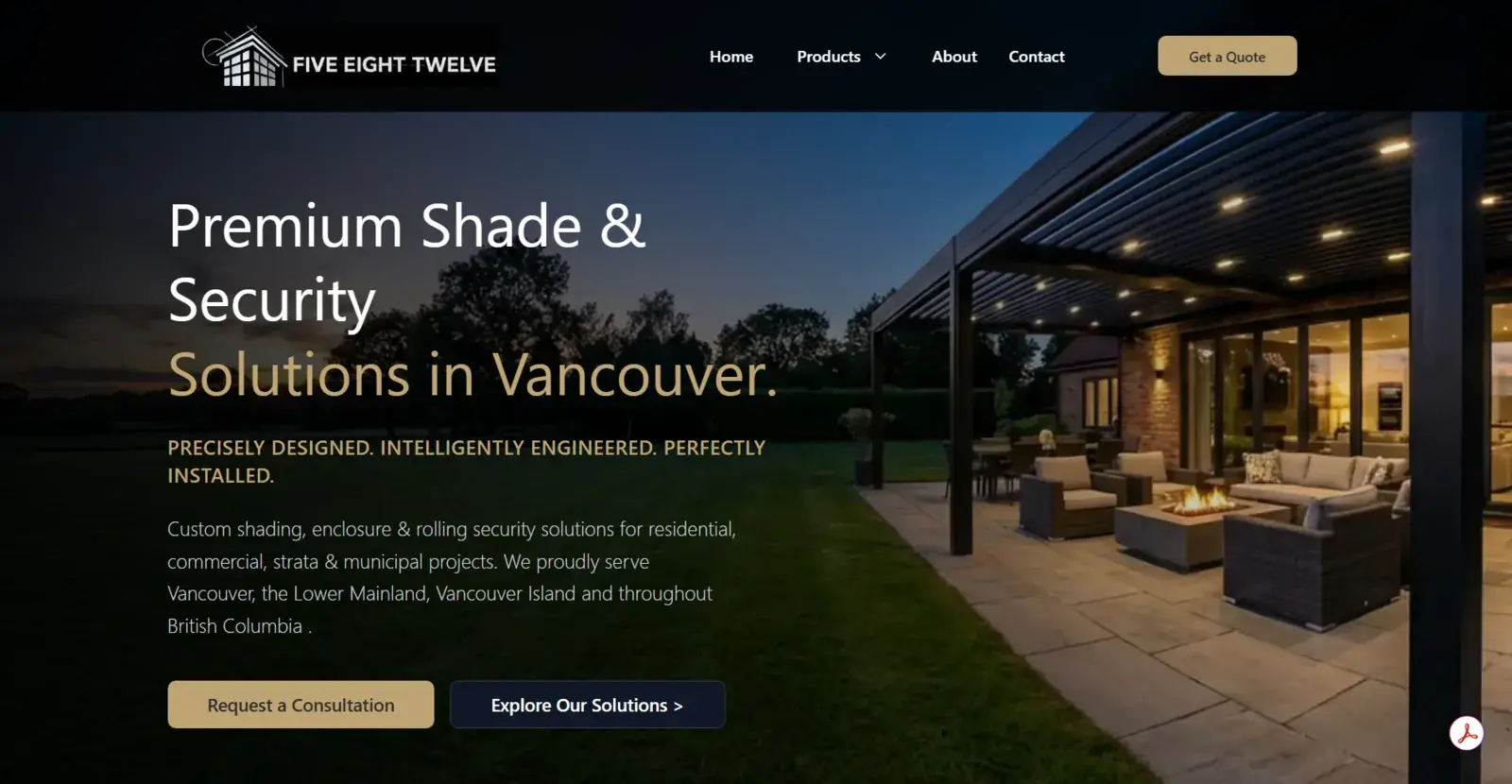
Selected work
Google Ads · SEO · Web
Less spend. The business volume stayed.
Acquisition rebuilt end-to-end: Google Ads strategy, conversion tracking and transparent reporting, with website and local-search support behind it.
How we work
01
02
03
04
Price
Quoted after the audit
Monthly, no contract
Campaign management added to MOST Grow when the monthly report shows paid search is worth it. The fee depends on the account and is set after the audit. Ad spend goes from your card straight to Google.
$3,500 to $10,000
Fixed project
One channel at the low end, two or three at the high: account audit, campaigns built from the economics, conversion tracking and landing hooks, a 60-day post-launch optimization window and weekly transparent reporting. Several channels add unified attribution, audience modelling and creative direction.
$1,500 to $3,500 a month
Month-to-month
For accounts too big for the Grow add-on: weekly campaign work, monthly performance review with the founder, new creative and landing tests. Cancel any month with 14 days notice.
All prices CAD, plus tax, agreed in writing before work starts. No percentage of ad spend: you own the ad accounts and pay the ad platforms directly, so the media budget never passes through us.
A good fit
Probably not us
Paid growth
SEO & search visibility
Many businesses eventually use both, but each should have a clear job. Explore SEO & Search Visibility.
Work backwards, not forwards. Customer value and close rate set what a lead can cost; the market sets how many leads are available; multiplying the two gives a budget the business can defend. Platforms also need enough conversion volume to learn, so there is a practical floor below which a campaign cannot be evaluated fairly. The model on this page is the starting conversation.
From your numbers, not an industry benchmark. Target CPA is the share of customer value the business can afford to spend acquiring one customer, and target CPL follows from the close rate. If those inputs are unknown, defining them is the first piece of work, because no campaign can be judged without them.
Different jobs. Paid captures demand today and stops when the spend stops; organic search compounds slowly and keeps working. Many businesses eventually run both, but each needs its own clear role and its own measurement. SEO and search visibility is a separate MOST service with its own page.
No. Percentage-of-spend aligns the agency's incentives against yours: it rewards spending more, not converting more. We charge a flat fee for a defined scope, and you keep 100% of the ad budget, paid by you directly to the platforms.
Yes, always. Ad accounts, analytics, conversion data and audiences are created under your ownership, and you pay the platforms directly. If we stopped working together tomorrow, everything keeps running in your hands.
We take them on where they fit the business, on the same footing as search: conversion tracking first, one reporting view, and you own the accounts. Our published results so far are from search campaigns. If paid social is the right channel for you, the audit will say so. If it is not, it will say that too.
Yes, and it is often the highest-leverage part of the engagement. MOST builds websites and custom platforms, so the landing experience, message match, forms, calls and tracking can be designed together with the campaign rather than bolted on after it.
Analytics and conversion events configured before launch, call and form tracking, and handoff into the CRM where the business uses one, with offline conversion import where the platform supports it. The aim is one report connecting spend to enquiries, opportunities and customers. Attribution is an evidence system, not certainty, and we say where the picture is incomplete.
Early signal arrives within weeks; decisions worth acting on need enough conversions to be meaningful, which can take one to three months depending on budget and volume. We set that expectation from the model at the start rather than promising a date.
No, and no honest agency can. Performance depends on market, offer, competition, budget, landing page, sales process, tracking, seasonality, creative and execution. What we commit to is the method: modelled economics before spend, transparent reporting against them, and stopping things that do not work.
The campaigns are yours either way. Most clients continue into optional month-to-month optimization: weekly campaign work, a monthly review with the founder, and new creative and landing tests, cancellable any month with 14 days notice.
If your question is not here, ask it directly.
Ready to model the opportunity?
Vancouver, BC · Serving Metro Vancouver
Insights
Buying AI services
Fixed-price vs. retainer: how to buy AI services in 2026Why monthly retainers became the default, and why most operators are better off without them. An honest comparison from an operator who has bought, sold, and run both models.6 min readWhat things cost
How much should a Vancouver business spend on Google Ads?A practical way to set a Vancouver Google Ads budget from economics, click costs, conversion rates and sales capacity.9 min readWhat things cost
ChatGPT Ads in Canada: what businesses need to know in 2026ChatGPT Ads is open to Canadian businesses. Who sees the ads, what you need before one runs, what changed in September 2026, and what nobody can tell you yet.8 min readBrowse the full library:The Field GuideBuyer GuidesAI by Industry
Start here
Google, Meta, or nothing yet. You get a written audit of the spend and the tracking behind it, yours to keep either way.
5.05 out of 5.10 Google reviews
Prefer to talk? (250) 581-0523 or [email protected]